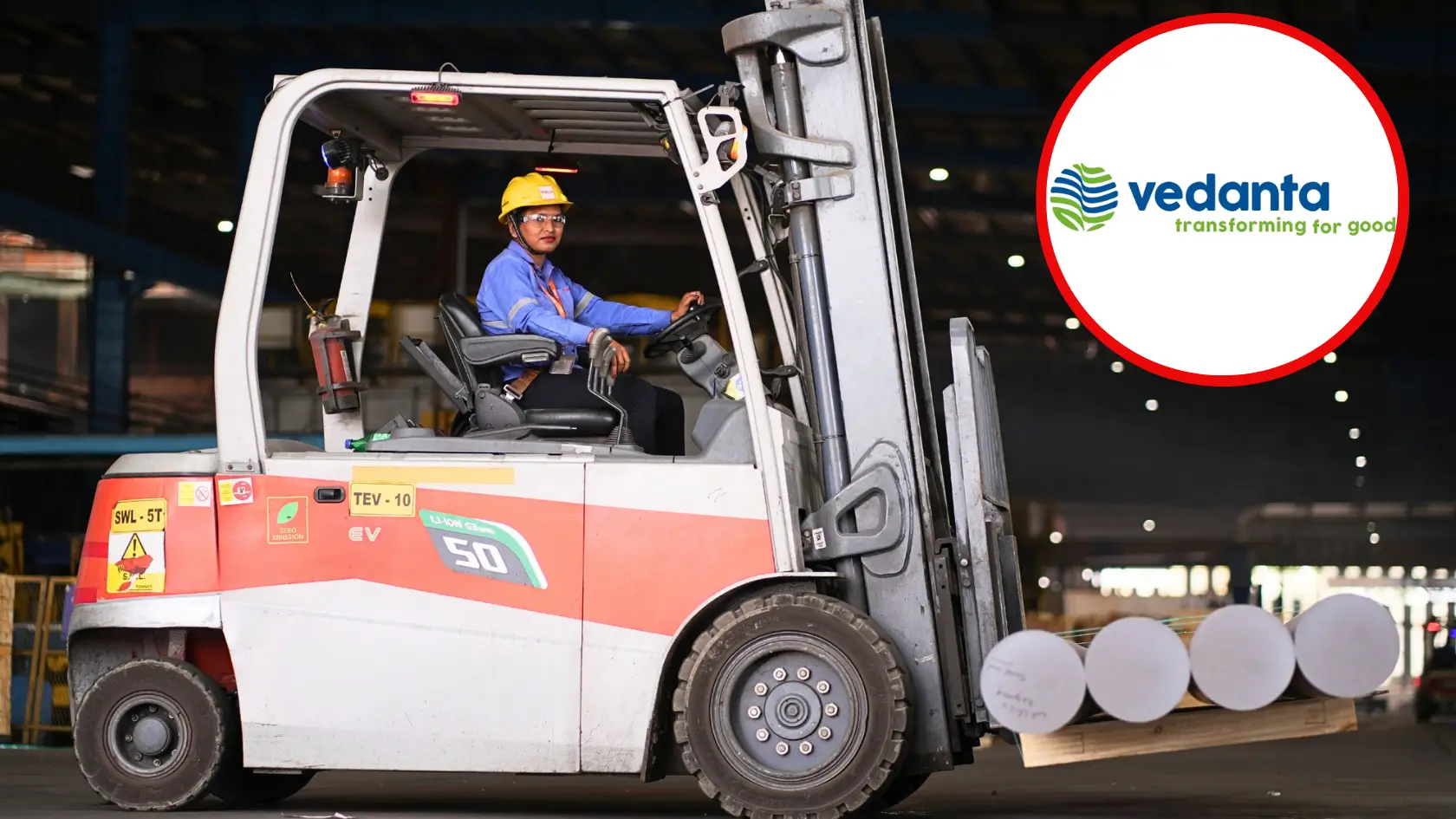
Vedanta Aluminium has expanded its fleet of electric forklifts in India to 142 units, marking a major move toward greener industrial logistics on World Sustainable Transport Day (November 26).
The company, India’s biggest aluminium producer, has more than doubled its existing fleet of lithium-ion battery-powered forklifts across its operations in Odisha and Chhattisgarh.
The United Nations observes World Sustainable Transport Day each year to highlight the importance of safe, accessible, and environmentally responsible transport systems.
Vedanta’s latest deployment closely aligns with these goals, supporting the company’s broader mission to reduce carbon emissions and adopt low-emission infrastructure across its operations.
A significant share of the new forklifts—116 units—has been rolled out at the Jharsuguda smelter.
Vedanta estimates this transition will eliminate around 4,450 tonnes of CO₂-equivalent emissions every year and reduce diesel consumption by over 1.63 million litres annually.
Beyond environmental gains, the electric fleet promises improved workplace safety, faster charging cycles, and lower maintenance demands.
Rajiv Kumar, CEO of Vedanta Aluminium, said the milestone reflects the company’s long-term sustainability vision.
“At Vedanta Aluminium, we view sustainability as more than a commitment; it is a catalyst for transformation. Our expanded electric forklift fleet demonstrates what becomes possible when we invest in technologies that benefit both our operations and our planet,” he said. He also noted the initiative’s role in expanding opportunities for women and transgender professionals in traditionally male-dominated industrial roles.
The company has additionally deployed India’s first 10-tonne-capacity electric forklifts at its Jharsuguda operations—another industry first in the country’s drive toward clean mobility in manufacturing.
The transition supports Vedanta’s larger decarbonization roadmap, including its target of achieving net-zero carbon emissions by 2050 and fully decarbonizing its Light Motor Vehicle fleet by 2030.
With the expansion, Vedanta Aluminium sets a new benchmark for sustainable industrial logistics in India, showcasing how large-scale operations can adopt clean technology without compromising on efficiency or productivity.