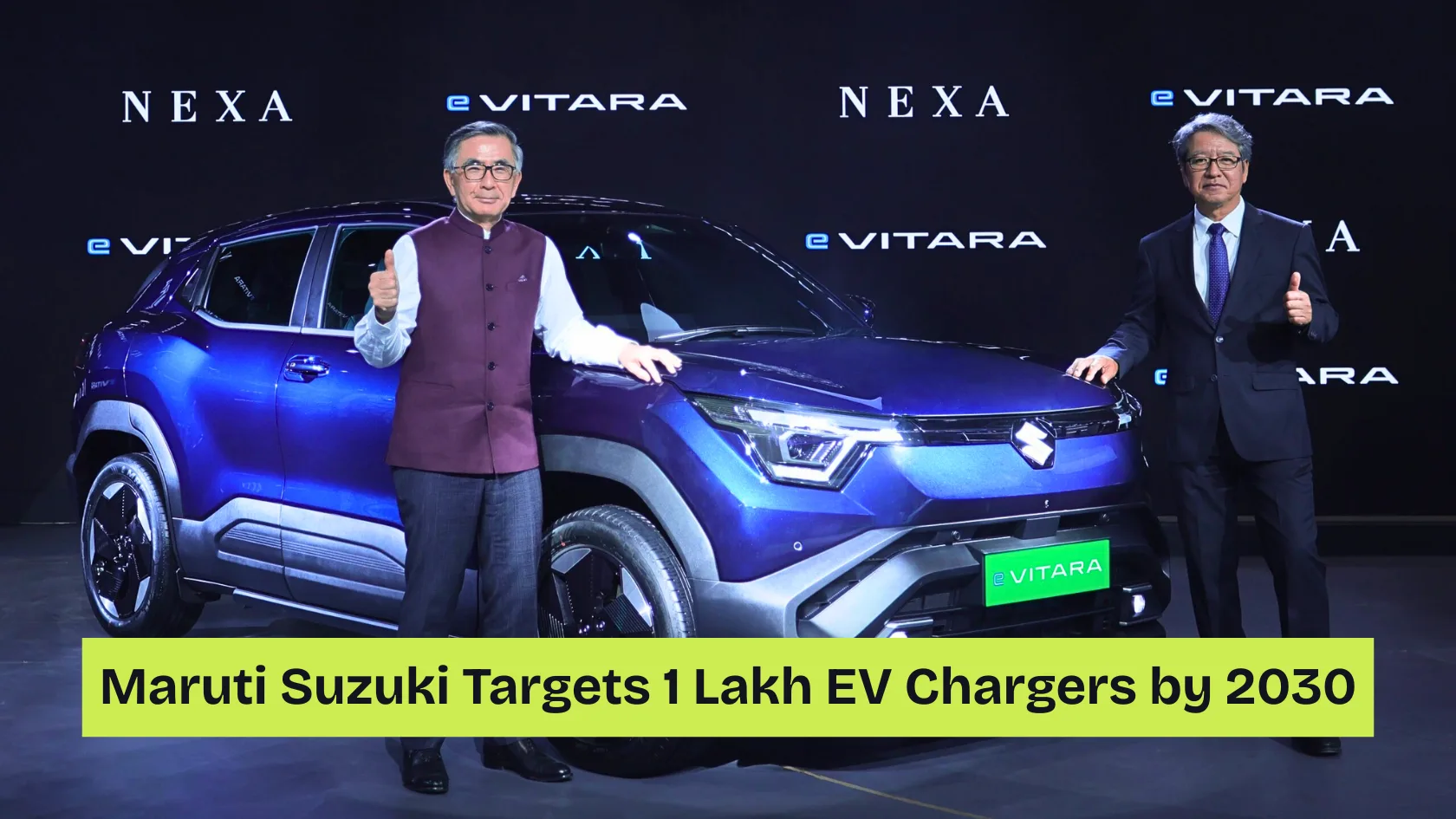
Maruti Suzuki is preparing a major expansion into India’s EV space with plans to install more than 100,000 charging points by 2030, marking one of the largest charging infrastructure commitments by any automaker in the country.
This network is designed to support the company’s transition into electric mobility, starting with its first EV, the eVitara.
The strategy focuses on two areas: offering EVs with strong real-world range and creating a charging ecosystem that is reliable, accessible and easy to use.
The company has already deployed over 2,000 exclusive chargers across more than 1,100 cities, supported through partnerships with 13 charge-point operators.
All chargers will be integrated into a single platform, allowing users to locate stations, start sessions, and make payments through the company’s app.
eVitara: Maruti Suzuki’s First Electric SUV Gets 5-Star Bharat NCAP Rating
Maruti’s first electric SUV, the eVitara, has recently received top safety ratings in Bharat NCAP crash tests. It scored:
-
5 stars in Adult Occupant Protection (AOP)
-
5 stars in Child Occupant Protection (COP)
The results reflect compliance with India’s latest safety regulations and position the eVitara among the safest electric SUVs tested in the country.
This adds another layer of confidence for buyers as Maruti prepares to scale its EV presence.
Why This Matters for EV Adoption
India’s charging infrastructure has grown quickly but remains uneven, with many highways, tier-2 cities and rural areas lacking adequate coverage.
A single, large, centrally managed network from a major automaker could help close this gap and significantly reduce range anxiety for new EV buyers.
What Experts Are Saying
Industry observers point out that EVs have become the next major battleground for carmakers.
Companies are not only competing on electric models but also on charging infrastructure, service readiness and ownership flexibility.
Experts highlight several key strengths in Maruti’s EV approach:
-
Centralised access through the “e for me” app for discovery, charging and payments
-
Highway focus, with chargers planned every 5–10 km across the top 100 cities
-
Flexible ownership options such as battery-as-a-service, subscription plans and assured buyback
-
Strong service network, including 1,500+ EV-ready workshops and 500+ service-on-wheels units for doorstep assistance
-
Top-tier safety, with the eVitara receiving 5-star Bharat NCAP ratings
Experts believe this combination of infrastructure, safety, and service support could help Maruti scale quickly in a competitive market.
What Maruti’s Plan Includes
-
1 lakh+ charging points by 2030
-
Fast-charging focuses on reducing downtime
-
Installations across malls, fuel stations, residential hubs and major highways
-
Integrated app-based access to all chargers
-
EV-ready workshops and mobile service units for remote support
-
Flexible EV ownership models to lower upfront costs
The Road Ahead
Setting up 100,000 charging points will require steady investment, grid coordination and strong uptime management.
But if delivered as planned, Maruti Suzuki’s network could become one of the largest in India and play a significant role in supporting the country’s shift toward electric mobility.
By combining a high-range, 5-star-rated electric SUV with a nationwide charging and service ecosystem, Maruti aims to make EV ownership practical and dependable for customers across the country.