Let me tell you about Pritesh Chandrakant Ghadi.
He’s a 26-year-old guy from Chicalim, Mormugao, in South Goa. In August 2023, he saved up ₹1,47,499 and bought himself an Ola S1 Pro 2nd Generation scooter. It got delivered to him on November 2, 2023.
Within weeks, the problems started — unusual motor noise, a touchscreen that kept crashing and needed hourly reboots, and Bluetooth that wouldn’t connect properly.
He did what any customer would do. He took it back to the Ola service centre in Vasco, Goa, for repairs.
And then his scooter disappeared.
Not metaphorically. Literally disappeared. He handed the vehicle to the authorised Ola dealer in Vasco. And when he came back asking for it, nobody at the company could tell him where it was.
He reached out to Ola multiple times, calls, visits to the showroom, every channel he could find. Nothing.
The scooter was gone.
The company that had taken his ₹1.47 lakh vehicle for repairs had no record of where it was.
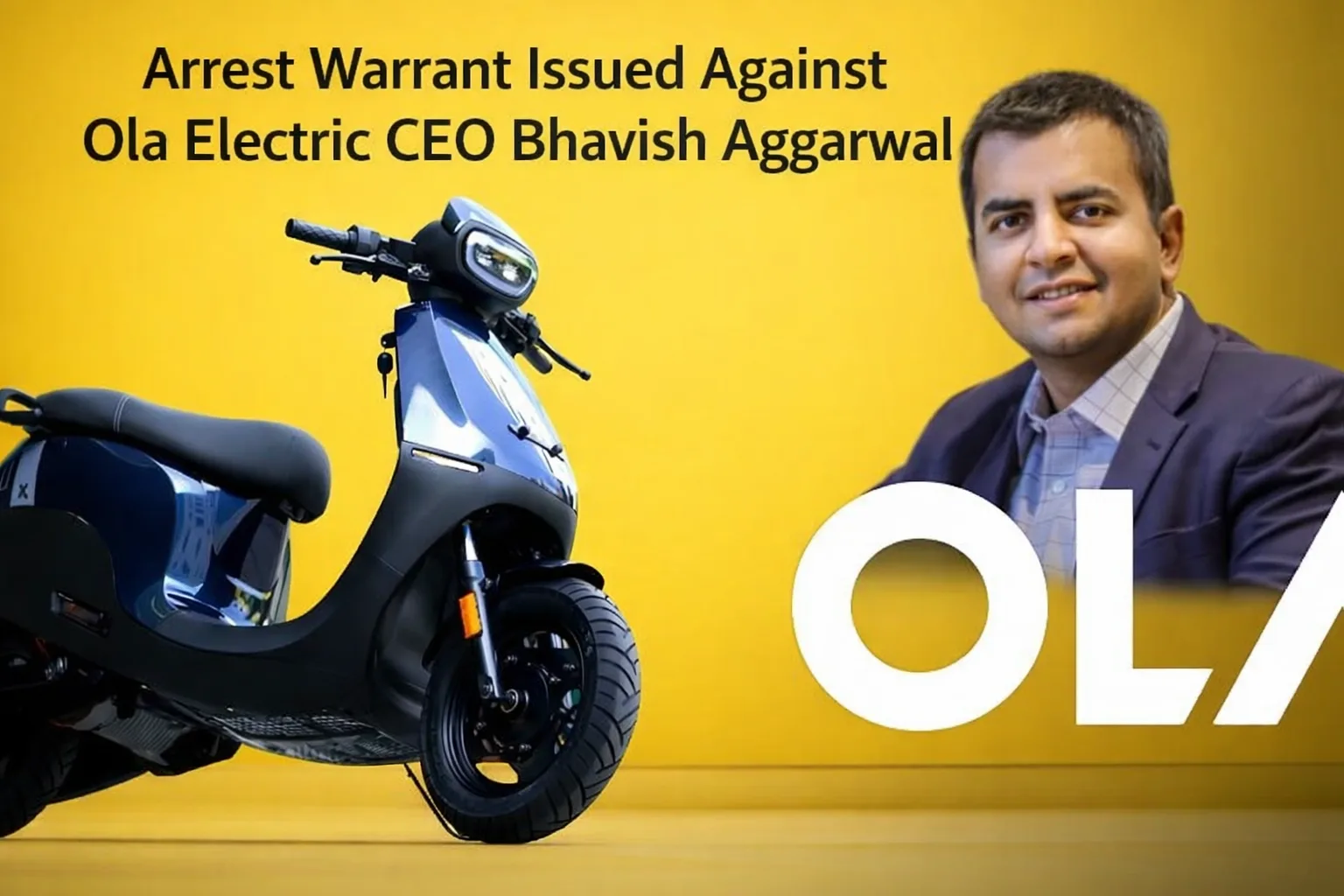
So he filed a consumer complaint. And that complaint has now led to a bailable arrest warrant being issued against Bhavish Aggarwal, the CEO and founder of one of India’s most valued startups.
What the Court Actually Did, and When
Here’s the timeline, because the details matter.
The case was first heard by the District Consumer Disputes Redressal Commission, South Goa, in April 2024. Over several months of hearings, it became clear that Ola Electric, despite being represented by a lawyer, could not explain where the customer’s scooter was or why it hadn’t been returned.
On January 20, 2026, the Commission ran out of patience.
They noted that since the vehicle’s whereabouts were unknown, the CEO himself needed to show up in person and answer for it. The Commission’s order was direct:
“It is necessary to call upon the CEO and founder of Ola Electric Ltd, Mr Bhavish Aggarwal, to remain present in person to clarify the whereabouts of the said bike and to explain why the same has not been reported and delivered after the necessary request made by the complainant.”
A notice was served to Aggarwal on January 28, 2026, directing him to appear before the Commission in Margao on February 4. The notice delivery was confirmed through tracking records on January 31.
February 4 came. The Commission called the case. Twice. Aggarwal did not show up. An advocate appeared on behalf of Ola Electric but told the court he had “no instructions” regarding the CEO’s personal appearance.
On February 11 and 13, 2026, the Commission issued the bailable warrant. Under Section 73 of the Bharatiya Nagarik Suraksha Sanhita (BNSS), it directs the Police Inspector of the Koramangala Police Station in Bengaluru, where Ola Electric’s offices are — to arrest Bhavish Aggarwal and produce him before the Commission in Margao on February 23, 2026, at 10:30 AM.
The bail amount: ₹1,47,499 — exactly equal to the price Pritesh Ghadi paid for his missing scooter.
Why the CEO? Why Not Just the Company’s Legal Team?
This is the question a lot of people are asking, and it’s fair. Normally in corporate disputes, the company’s legal representative handles proceedings. Why would a consumer court go after the CEO personally?
Because the company’s legal representatives kept showing up and saying they had no information. Hearing after hearing, Ola’s lawyers appeared but couldn’t answer the most basic question: where is this man’s scooter?
The Commission decided that if the company’s representatives don’t know, and the company apparently doesn’t know, then the person ultimately responsible for that company’s operations needs to stand in the room and explain himself.
Consumer courts in India have the power to summon individuals, not just companies. And when a company repeatedly fails to provide basic answers despite months of hearings, courts can and do escalate.
In Pritesh Ghadi’s case, he’s not just asking for a refund.
He’s filed for the full purchase amount of ₹1,47,499, plus ₹50,000 in compensation, plus litigation costs, all under Section 35 of the Consumer Protection Act, 2019, citing deficiency in service and unfair trade practices.
This Isn’t an Isolated Case. It’s the Pattern.
What makes this story land harder than a typical consumer dispute is the context around it.
Ola Electric has been drowning in consumer complaints for over a year. Between September 2023 and August 2024 alone, the National Consumer Helpline received 10,644 complaints against Ola, covering service delays, delivery failures, and services paid for but never provided.
The Central Consumer Protection Authority issued a formal show-cause notice in October 2024 for alleged violations of consumer rights, misleading advertising, and unfair trade practices.
When the CCPA independently verified Ola’s claim that 99.1% of complaints had been resolved, they found the opposite — nearly 80% of customers they contacted said their issues were still open.
In November 2025, the Goa government took the extraordinary step of suspending new Ola Electric registrations on the VAHAN portal entirely — specifically because of the backlog of unresolved service complaints and “lack of support” that customers were experiencing.
That suspension was what set the backdrop for the court to be even more serious about Aggarwal’s non-appearance.
Thousands of owners across India have told virtually the same story online: scooter goes in for service, stays there for weeks or months, nobody calls back, nobody can tell you when it’ll be ready.
Some have been charged for repairs while still under warranty. Some have been told parts aren’t available.
Some, like Pritesh Ghadi, are still waiting to find out if their scooter even exists anymore.
What Happens on February 23?
The next hearing is scheduled for February 23 at 10:30 AM before the South Goa Commission in Margao.
Since this is a bailable warrant, Aggarwal can avoid being physically brought to court by posting the ₹1,47,499 bond at the Koramangala Police Station in Bengaluru, with one surety in the same amount.
As of writing, Ola Electric has not responded to media requests for comment on the warrant.
The February 23 hearing will determine whether Aggarwal or an authorised representative appears, what the company’s explanation is for the missing scooter, and what direction the Commission gives on Ghadi’s claim for refund and compensation.
The Bigger Picture
I want to step back for a second and say something plainly.
This case is about one scooter and one customer. Pritesh Ghadi spent ₹1.47 lakh — not a small amount for most Indians — on a vehicle that broke down, went to a service centre, and never came back. He has been fighting for it in a consumer court for nearly two years. That is the actual story here.
The arrest warrant against the CEO of a major publicly listed company is remarkable and newsworthy. But the reason it happened is not that consumer courts in India are aggressive or because regulators are going after startups.
It happened because a company took a man’s scooter, lost it, and then couldn’t be bothered to send someone to a hearing to explain why.
For a company that was once the poster child of India’s EV revolution, that sold 4 lakh scooters in a single year, that listed on the stock exchange at a valuation that made its founder a billionaire, this is a genuinely stunning moment.
Not because arrest warrants are rare. But because the case that triggered it is so painfully ordinary.
A man bought a scooter. The scooter broke. He gave it for service. It vanished. Nobody called him back.
That’s it. That’s the whole story.
And it turns out that if you do that to enough people, eventually a consumer court in South Goa asks your CEO to come and explain himself in person. And if the CEO doesn’t show up, they send the police.
Hearing date: February 23, 2026, 10:30 AM — District Consumer Disputes Redressal Commission, South Goa, Margao.
Case filed under Section 35 of the Consumer Protection Act, 2019. Warrant issued under Section 73 of the Bharatiya Nagarik Suraksha Sanhita (BNSS).
Ola Electric did not respond to requests for comment.